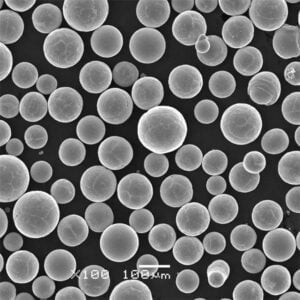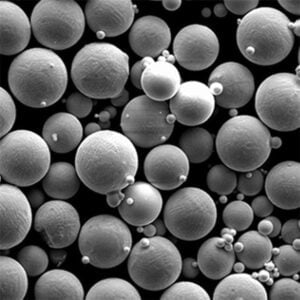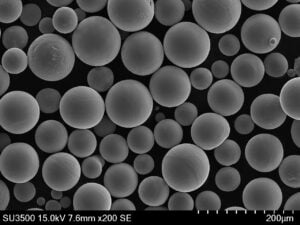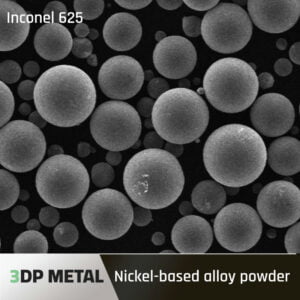
Metal powder atomisation is a process used to produce fine metal powders with precise particle sizes and distributions. This guide provides a comprehensive overview of metal powder atomisation equipment, including types, characteristics, applications, specifications, suppliers, installation, operation, maintenance, and more.
Overview of Metal Powder Atomisation Equipment
Metal powder atomisation involves breaking up a molten metal stream into fine droplets which solidify into powder particles. Specialised atomisation equipment is used to atomise the metal and control the powder characteristics.
The main types of atomisers include:
| Atomiser Types | Description |
|---|---|
| Gas atomisers | Use high velocity inert gas jets to break up metal stream |
| Water atomisers | Use water jets to atomise molten metal |
| Centrifugal atomisers | Use spinning discs/wheels to fling off metal droplets |
| Ultrasonic atomisers | Use ultrasonic vibrations to disturb metal stream |
Atomisation allows extensive control over powder particle size, shape, chemistry, microstructure, and particle size distribution. The process parameters can be tailored to produce powders optimised for a given application.
Key applications of metal powder atomisation include:
| Applications of Metal Powder Atomisation |
|---|
| Additive manufacturing powders |
| Metal injection moulding powders |
| Thermal spray coatings |
| Powder metallurgy |
| Brazing alloys |
| Surface coating |
| Catalysts |
| Chemical/petroleum industry |
| Electronic materials |
| Magnetic materials |
Specifications of Metal Powder Atomiser Equipment
Metal powder atomisers are complex engineered systems designed for continuous low-cost powder production. The main design specifications include:
| Atomiser Equipment Specifications | Details |
|---|---|
| Atomisation method | Gas, water, centrifugal, ultrasonic |
| Metal types handled | Ferrous and non-ferrous metals; alloys |
| Metal feed rate | Up to 2000 kg/h |
| Gas flow rates | Up to 100,000 m3/h at 10-15 bar |
| Nozzle design | Multiple nozzles; flow/pressure optimised |
| Disc diameter | Up to 500 mm for centrifugal atomiser |
| Frequency | 20-60 kHz range for ultrasonic atomiser |
| Controls | PLC/computer control with data monitoring |
| Cooling | Water/air cooled components |
| Environmental systems | Fume extraction; gas cleaning |
| Automation level | Manual to fully automated options |
| Compliance | ATEX, CE directives; quality standards |
The atomiser chamber is fabricated from high grade steel to handle high temperatures and metal splatter. Critical components like gas nozzles and spinning discs are made from special alloys with high durability. Integrated cooling, safety interlocks, and fume extraction minimise environmental impact.
Advanced controls allow optimising process parameters like gas flow, metal flow rate, disk speed, nozzle configurations to achieve desired powder characteristics. The systems can be integrated with metal melting, powder separation, and collection units for automated powder production.
Suppliers of Metal Powder Atomisation Systems
There are a number of leading global suppliers that manufacture gas, water, centrifugal and ultrasonic atomisation systems:
| Atomiser Suppliers | Location |
|---|---|
| AP&C | Canada |
| ALD Vacuum Technologies | Germany |
| PSI Ltd. | UK |
| COPROD | France |
| Makin Metal Powders | UK |
| BHP | Australia |
The suppliers offer standard models as well as custom engineered atomisers tailored to specific metal types and powder requirements. Used and refurbished atomisers are also available at 30-50% lower costs compared to new equipment.
Atomiser prices vary widely based on the capacity, level of automation and additional processing units. Indicative new system costs are:
| Atomiser Type | Capacity | Price Range |
|---|---|---|
| Gas atomiser | 50 – 1000 kg/h | $500,000 – $5,000,000 |
| Water atomiser | 50 – 500 kg/h | $200,000 – $2,000,000 |
| Centrifugal atomiser | 10 – 200 kg/h | $100,000 – $1,000,000 |
| Ultrasonic atomiser | 1 – 50 kg/h | $50,000 – $500,000 |
Installation and Operation of Metal Powder Atomisers
Proper installation and operation procedures must be followed to achieve design production rates and powder quality from metal atomisers:
- Atomisers require dedicated foundation and services including compressed air, cooling water, ventilation ducting. The area must be climate controlled and free of drafts.
- Utility requirements are confirmed based on capacity – electricity, inert gas, exhaust systems. Safety interlocks are tested.
- Trial runs are performed and process parameters fine-tuned to optimise powder production and characteristics.
- During operation, all process indicators and data are monitored via control system. Feed rates, gas parameters, temperature are controlled per the recipe.
- If any parameter deviates from range, the system is safely shut down. Power and utilities are switched off.
- The product powder is collected after separation from the gas stream using cyclones, bag filters, scrubbers etc. Periodic sample testing validates powder quality.
- Preventive maintenance as per schedule includes inspection, replacements of worn parts, overhauls. This minimises unplanned downtime.
Maintenance and Safety Aspects
Routine maintenance is critical for maximum uptime and safety:
- Visual inspections to check for leaks, damage, wear
- Replacing consumable items like filters, gaskets
- Testing interlocks, safety devices
- Lubricating moving parts
- Inspecting rotor, nozzle, disk condition
- Checking utilities like cooling, ventilation
- Calibrating instruments
- Reviewing data logs and trends
Safety considerations for metal powder atomisers:
- High voltage electronics require isolation and barriers
- Inert gas blanketing to prevent oxidation or fires
- Avoiding water contact with molten metal (steam explosion risk)
- Fume extraction to minimise exposure
- Personnel require protective gear and training
- Shielding moving parts; interlocks on doors
- Emergency stop buttons and power isolation
How to Select a Metal Powder Atomiser
The key factors to consider when selecting a metal powder atomisation system are:
| Atomiser Selection Criteria | Details |
|---|---|
| Production capacity | Required metal powder output in kg/h |
| Target powder specs | Particle size range, morphology, purity etc. |
| Metal types | Compatibility with ferrous, non-ferrous etc. |
| Costs | Equipment cost, operating cost per kg |
| Space requirements | System footprint; height constraints |
| Support | Installation support, training, maintenance |
| Options | Additional handling, separation, collection units |
| Control features | Level of monitoring, data tracking, automation |
| Certification | Safety, electrical, pressure vessel codes |
| Delivery time | Lead time for delivery, installation, commissioning |
The atomiser technology – gas, water, centrifugal or ultrasonic – is selected based on the material, capacity, powder specifications and budget. Leading global suppliers have the engineering expertise to recommend optimal atomiser configurations for the application.
Advantages and Limitations of Metal Powder Atomisers
Some key benefits and limitations of atomiser systems are:
Advantages
- Continuous, large scale production of fine metal powders
- Control over particle size distribution
- Ability to atomise reactive/high melting point alloys
- Automated powder manufacturing reducing costs
- Integrated powder handling and collection
- Parameter monitoring and data tracking
Limitations
- High equipment and operating costs
- Complex system requiring specialised operation and maintenance
- Size, footprint constraints of large units
- Limits on feedstock shape and quality
- Safety considerations for high pressure gas, water, moving parts
- Additional downstream processing needed to achieve final powder specs
While atomisers allow superior powder production, the process and equipment complexity necessitate expert design and engineering support.
FAQ
Here are some common FAQs about metal powder atomisers:
Q: What particle size range can be achieved using atomisation?
A: Atomisers can produce powders from 1 micron to 250 microns depending on the technology and process parameters used. Gas and centrifugal atomisers can reach finer sizes under 20 microns.
Q: How is the powder collected after atomisation?
A: The atomised powder entrained in gas is separated using cyclones, bag house filters, wet scrubbers etc. Magnetic separation may be used for iron powders. The powder is then sieved to narrow the size distribution if needed.
Q: What safety measures are required for metal powder atomisers?
A: Key safety features include interlocks, E-stops, ventilation, explosion proof electricals, inert gas blanketing, protective gear for operators and more. Water atomisers also need measures to prevent steam explosions.
Q: How often is maintenance required for metal powder atomisers?
A: Preventive maintenance is scheduled weekly, monthly, quarterly based on running hours. This includes changing consumables like filters, testing interlocks, inspecting parts for wear, overhauling rotating components etc.
Q: Can any metal alloy be atomised into powder?
A: Most commercial alloys of steel, aluminum, copper, nickel titanium etc. can be atomised. Refractory metals may require special atomiser configurations. Limited alloying is done to prevent segregation in powders.
Q: What types of raw material can be used – ingots, liquid metal?
A: Different atomisers accept different feedstock – from liquid metal pouring, continuous casting to solid wire/rod feeding. The feed material must meet chemistry, purity and quality standards for atomisation.
Q: What are the running costs of a metal powder atomiser?
A: Main costs are utilities – electricity, inert gas, cooling water. Consumables and maintenance are also significant. Indicative operating costs range from $15-50/kg powder depending on capacity, complexity, and labor.
Conclusion
Metal powder atomisation allows large volume production of fine, consistent powders from various metals and alloys. With the growth in powder metallurgy, atomisers are an indispensable equipment for cost-effective powder manufacturing.
However, the process involves complex engineered systems operating at high intensities. This guide summarises the critical factors – atomiser types, selection criteria, specifications, installation and operating procedures – that users must consider for safe, reliable metal powder atomisation.