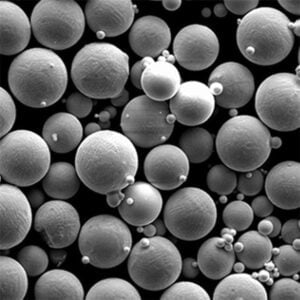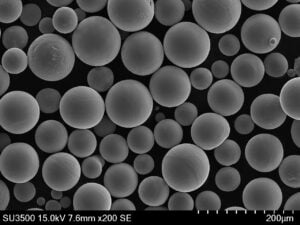
proszek niobowo-tytanowy to zaawansowany materiał międzymetaliczny o doskonałych właściwościach nadprzewodzących i wysokiej wytrzymałości. Niniejszy artykuł zawiera kompleksowy przegląd proszku NbTi, w tym jego skład, metody produkcji, kluczowe właściwości, zastosowania, specyfikacje, ceny i nie tylko.
Przegląd proszku niobowo-tytanowego
NbTi to związek międzymetaliczny składający się z niobu (Nb) i tytanu (Ti). Jest uważany za materiał nadprzewodnikowy, zdolny do przewodzenia prądu elektrycznego z zerową rezystancją poniżej temperatury krytycznej. NbTi ma wyższą wytrzymałość w porównaniu do czystego niobu i ulepszone właściwości nadprzewodzące dzięki dodatkom tytanu.
Kluczowe właściwości, które sprawiają, że NbTi jest przydatny w różnych zaawansowanych technologicznie zastosowaniach, są następujące:
- Wysoka temperatura krytyczna
- Wysokie krytyczne natężenie pola magnetycznego
- Dobra ciągliwość i podatność na obróbkę
- Doskonała wytrzymałość
- Odporność na korozję
- Biokompatybilność
Proszek NbTi może być zagęszczany do różnych form produktów, od drutu i taśmy po pręty i specjalne kształty. Kluczowe zastosowania wykorzystują nadprzewodnictwo, takie jak maszyny MRI, akceleratory cząstek, reaktory termojądrowe tokamak i magnesy o wysokim polu. Połączenie wytrzymałości i przewodnictwa nadaje się również do zaawansowanych urządzeń medycznych, komponentów lotniczych, detektorów cząstek i magazynowania energii.
Skład proszku niobowo-tytanowego
| Niobium (Nb) Content (wt%) | Titanium (Ti) Content (wt%) | Właściwości | Zastosowania |
|---|---|---|---|
| 40-50 | 50-60 | * Good balance of strength and ductility * High corrosion resistance * Moderate machinability | * Aerospace components (e.g., turbine blades, landing gear) * Chemical processing equipment * Biomedical implants |
| 50-56 | 44-50 | * High strength * Excellent creep resistance at elevated temperatures * Suitable for additive manufacturing (3D printing) | * Jet engine parts * Heat exchangers * High-performance sporting goods |
| 56-65 | 35-44 | * Very high strength * Superior wear resistance * Limited ductility | * Cutting tools * Wear plates * Military applications |
| 65-75 | 25-35 | * Extreme high-temperature strength * Improved oxidation resistance * Brittle at room temperature | * Refractory crucibles * Rocket engine components * Leading edges of hypersonic vehicles |
Produkcja proszku niobowo-tytanowego
| Etap | Opis | Kluczowe kwestie |
|---|---|---|
| Raw Material Selection | The foundation for high-quality NbTi powder lies in meticulous selection of starting materials. Niobium and titanium, the primary elements, must be of high purity to minimize impurities in the final product. | – Niob: Electron Beam Melted (EBM) niobium or niobium hydride powder are preferred due to their low oxygen content and good flowability. – Tytan: Similar to niobium, high-purity titanium sponge or powder obtained through various techniques like Kroll process or hydride-dehydride (HDH) method is used. |
| Przygotowanie proszku | Here, the chosen niobium and titanium are transformed into a uniform powder mixture. There are two main approaches: pre-alloyed and blended elemental powders. | – Pre-alloyed method: This involves directly producing a NbTi alloy through techniques like metallothermic reduction or reactive sintering. It offers good control over composition but can be more complex and expensive. – Blended elemental method: Here, individual niobium and titanium powders are precisely weighed and mixed to achieve the desired final composition. This method is simpler but requires careful control of particle size and distribution for homogenous mixing. |
| Comminution (Grinding) | Regardless of the preparation method, the resulting material (pre-alloyed or blended) might require size reduction to achieve the desired particle size range for NbTi powder. Grinding techniques like ball milling or attritor milling are employed. | – Rozmiar i rozkład cząstek: NbTi powder for different applications have specific particle size requirements. For instance, finer powders are suitable for additive manufacturing techniques, while larger particles might be used for traditional methods like wire drawing. – Kontrola zanieczyszczeń: During grinding, contamination from grinding media or lubricants needs to be minimized to maintain powder purity. |
| Classification and Segregation | After grinding, the NbTi powder needs to be classified to achieve a narrow particle size distribution. This ensures consistent properties in the final product. | – Sieving: A traditional method that separates particles based on size using sieves with different mesh openings. However, sieving can be inefficient for submicron powders. – Air classification: This technique utilizes differing settling velocities of particles in an air stream to separate them based on size. It offers better control for finer powders. |
| Vacuum Cleaning and Degassing | Since the presence of oxygen and other gases can negatively impact the superconducting properties of NbTi, these impurities need to be removed. | – Vacuum outgassing: The powder is subjected to high vacuum and elevated temperatures to remove adsorbed gases on the powder surface. – Electron beam melting (EBM) refining: An alternative approach involves melting the NbTi powder in a vacuum using an electron beam. This not only removes gases but also refines the microstructure and improves homogeneity. |
| Consolidation and Finishing | The final stage involves transforming the NbTi powder into a usable form depending on the desired application. | – Powder metallurgy techniques: NbTi powder can be pressed into shapes and sintered at high temperatures to create bulk materials. – Produkcja addytywna: Techniques like electron beam melting (EBM) or selective laser melting (SLM) can be used to create complex 3D structures directly from NbTi powder. – Wire drawing: NbTi powder can be consolidated into rods and then drawn into wires for applications like superconducting magnets. |
Właściwości z proszek niobowo-tytanowy
| Nieruchomość | Opis | Wpływ |
|---|---|---|
| Skład | Niobium titanium (NbTi) powder is a binary alloy, meaning it primarily consists of two elements: niobium (Nb) and titanium (Ti). The specific ratio of these elements can vary depending on the desired properties of the final product. Common compositions include Nb42Ti58 and Nb56Ti44, indicating the weight percentage of each element in the alloy. | The Nb content influences the high-temperature performance and corrosion resistance. Higher Nb content translates to better performance in these areas. Titanium, on the other hand, contributes to strength, hardness, and biocompatibility. |
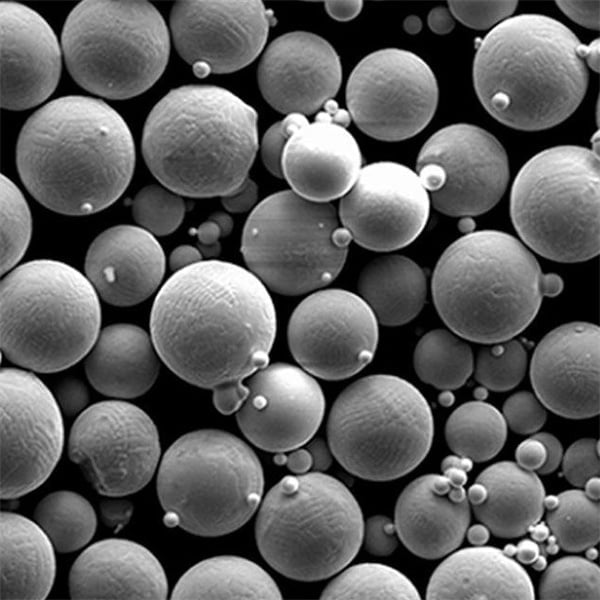
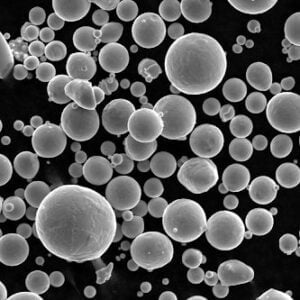
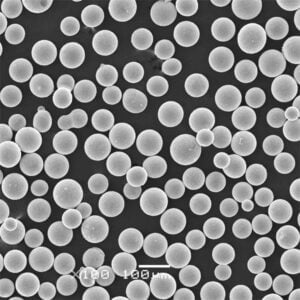
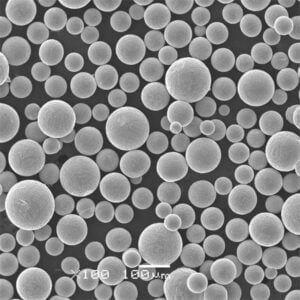
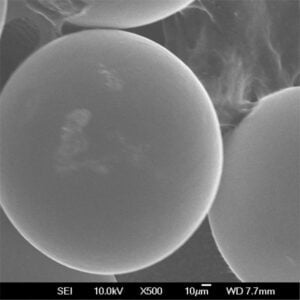
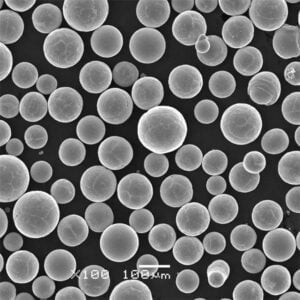
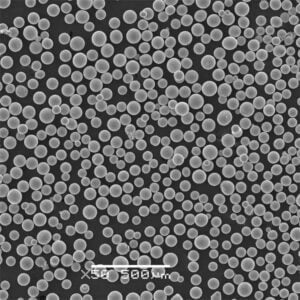
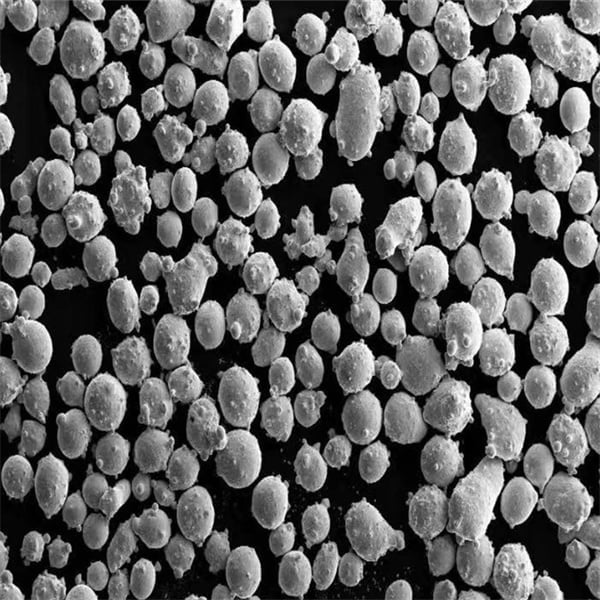
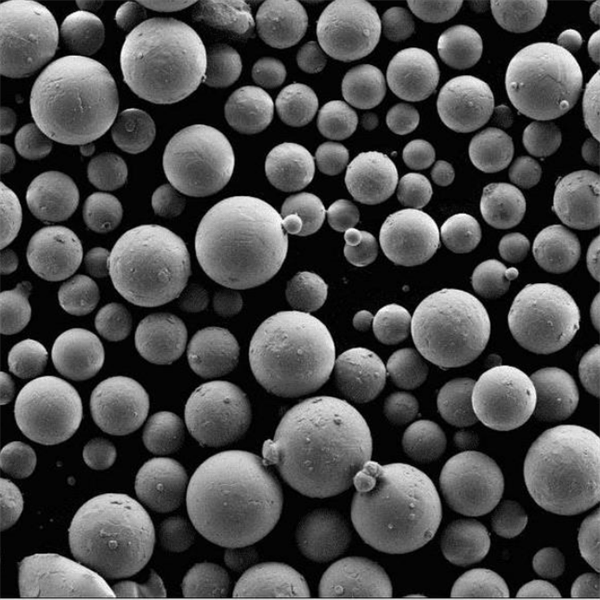
| Rozmiar i morfologia cząstek | Niobium titanium powder is available in a range of particle sizes, typically between 10 and 105 microns. The particle morphology, or shape, is usually spherical. | Particle size plays a crucial role in powder bed fusion additive manufacturing processes, where the powder particles are melted together to form the final object. Smaller particles generally result in finer features and smoother surfaces but can be more challenging to handle due to increased surface area and potential for agglomeration (clumping). Spherical morphology offers good flow characteristics and packing density, essential for consistent material deposition during 3D printing. |
| Gęstość | The density of niobium titanium powder typically falls within the range of 6.2 to 6.5 g/cc (grams per cubic centimeter). This value is lower than that of pure niobium (8.57 g/cc) and slightly higher than pure titanium (4.51 g/cc), reflecting the combined contributions of both elements. | Density is a critical factor for several applications. A lower density translates to lighter weight components in aerospace and automotive industries. However, for applications demanding high strength-to-weight ratio, a balance between density and mechanical properties is necessary. |
| Właściwości mechaniczne | Niobium titanium powder exhibits a combination of desirable mechanical properties. Ultimate tensile strength, a measure of the maximum stress a material can withstand before failure, ranges from 500 to 800 MPa (megapascals). Yield strength, the stress at which a material begins to deform plastically, falls between 400 and 600 MPa. The modulus of elasticity, indicative of a material’s stiffness, is typically within the range of 52 to 69 GPa (gigapascals). | These properties make niobium titanium powder suitable for applications requiring good strength and structural integrity. For instance, the high yield strength allows components to resist deformation under load. The adjustable range of properties through composition control enables tailoring the material for specific needs. |
| Właściwości termiczne | Niobium, a refractory metal, contributes significantly to the high melting point of niobium titanium powder, typically exceeding 3000°C. This translates to excellent high-temperature performance, making the material suitable for applications exposed to extreme heat. | The high melting point allows niobium titanium components to function reliably in environments with elevated temperatures, such as in jet engines and rocket propulsion systems. |
| Właściwości elektryczne | Niobium titanium powder exhibits moderate electrical conductivity. While not as conductive as pure copper or aluminum, its conductivity is sufficient for certain electrical applications. | The electrical conductivity can be beneficial for components requiring some level of electrical current flow, such as heat exchangers or components in electronic devices. |
| Odporność na korozję | Niobium titanium powder demonstrates good corrosion resistance in various environments, including acidic, alkaline, and saline solutions. This resistance is attributed to the formation of a passive oxide layer on the surface that hinders further corrosion. | The corrosion resistance enables the use of niobium titanium components in applications exposed to harsh environments, such as chemical processing equipment or marine components. |
| Biokompatybilność | The presence of titanium in niobium titanium powder contributes to its biocompatible nature. This property makes the material suitable for use in medical implants, such as artificial bones and joints, where good interaction with the body’s tissues is crucial. | Biocompatibility minimizes the risk of rejection or adverse reactions when implanted in the human body. This characteristic opens doors for the development of advanced medical devices with improved patient outcomes. |

Zastosowania proszku niobowo-tytanowego
| Przemysł | Zastosowanie | Key Properties Leveraged | Korzyści |
|---|---|---|---|
| Lotnictwo i kosmonautyka | * Aircraft structural components (wings, fuselage) * Jet engine components (disks, blades) * Rocket propulsion systems (thrust chambers, nozzles) | * High strength-to-weight ratio * Excellent mechanical strength at elevated temperatures * Superior creep resistance | * Lightweight construction for improved fuel efficiency and increased payload capacity * Enhanced performance in high-stress environments * Extended component lifespan due to resistance to deformation under heat |
| Medyczny | * Orthopedic implants (bone plates, screws, joint replacements) * Surgical instruments | * Biocompatible – minimizes risk of rejection by the body * Outstanding corrosion resistance – reduces risk of infection * Good machinability – allows for creation of complex implant geometries | * Enables long-term implantation for improved patient outcomes * Provides a durable and reliable material for surgical procedures * Facilitates minimally invasive surgery through creation of intricate instruments |
| Energia | * Superconducting magnets for MRI machines and particle accelerators * High-performance electrodes for energy storage devices | * Superconductivity – allows for efficient transmission of electricity with minimal losses * High electrical conductivity – facilitates efficient energy transfer * Good mechanical strength – enables construction of robust magnets | * Enables powerful MRI machines for detailed medical imaging * Supports development of next-generation particle accelerators for scientific research * Contributes to advancements in energy storage solutions for renewable energy integration |
| Przetwarzanie chemiczne | * Reaction vessels and heat exchangers * Components for handling corrosive chemicals | * Exceptional corrosion resistance – withstands exposure to harsh chemicals * High melting point – maintains structural integrity at elevated temperatures * Good weldability – allows for secure fabrication of complex equipment | * Ensures safe and reliable handling of corrosive materials in chemical plants * Minimizes downtime and maintenance costs due to extended equipment life * Enables efficient heat transfer in challenging chemical processing environments |
| Elektronika użytkowa | * High-performance capacitors for portable electronics * Heat sinks for electronic devices | * High electrical conductivity – facilitates efficient energy storage and discharge * Good thermal conductivity – promotes effective heat dissipation * Tailorable properties for specific electronic applications | * Enables development of compact and powerful capacitors for longer battery life in portable devices * Contributes to improved thermal management in electronic components for enhanced performance and reliability * Offers versatility for customization in various consumer electronics applications |
proszek niobowo-tytanowy Specyfikacje
| Specyfikacja | Opis | Jednostki | Typowe wartości |
|---|---|---|---|
| Skład | Niobium (Nb) and Titanium (Ti) content by weight | wt% | Nb: 40-75% <br> Ti: Balance |
| Balance Elements | wt% | < 0.X% (X denotes specific element like Ta, O, C, N) | |
| Rozkład wielkości cząstek | Range of particle diameters | μm (microns) | 10-100 (can be customized) |
| Morfologia cząsteczek | Shape of the powder particles | – | Kulisty |
| Gęstość pozorna | Density of the powder in its loose, poured state | g/cm³ | 2.5-4.5 |
| Gęstość kranu | Density of the powder after being tapped to settle any trapped air | g/cm³ | Slightly higher than apparent density (e.g., 3.0-5.0) |
| Płynność | Ease with which the powder flows | sec/50g | Lower values indicate better flow |
| Zawartość tlenu | Amount of oxygen present in the powder | wt% | ≤ 0.X% (dependent on application) |
| Zawartość azotu | Amount of nitrogen present in the powder | wt% | ≤ 0.X% (dependent on application) |
| Zawartość węgla | Amount of carbon present in the powder | wt% | ≤ 0.X% (dependent on application) |
| Zawartość wilgoci | Amount of water vapor absorbed by the powder | wt% | ≤ 0.X% (typically very low) |
| Laser Sintering Properties | How well the powder interacts with a laser beam during additive manufacturing processes | – | Optimized for good melting, spreading, and densification |
Dostawcy i ceny
Niobowo-tytanowy proszek i drut jest produkowany tylko przez garstkę wyspecjalizowanych dostawców ze względu na niszowe, zaawansowane technologicznie zastosowania i wymagany specjalistyczny sprzęt produkcyjny.
Wiodący dostawcy proszku NbTi
- Wah Chang (USA)
- Ningxia Orient Tantalum Industry (Chiny)
- HC Starck (Niemcy)
- Phelly Materials (Holandia)
Wycena
Jako specjalistyczny sproszkowany materiał międzymetaliczny, proszek niobowo-tytanowy oznacza wyższą cenę w porównaniu do zwykłych metali. Koszt za 100 g może wahać się od około $250 do $500+ w zależności od czystości i charakterystyki cząstek.
Złom i proszek NbTi z recyklingu są sprzedawane z rabatami w wysokości 40% lub więcej w porównaniu do poziomów cen pierwotnego proszku.
W alternatywnych formach, takich jak drut, 1 kg szpula nadprzewodzącego drutu NbTi jest sprzedawana za $3,000 do $5,000+ w zależności od liczby pasm i przetwarzania.
Porównanie z innymi materiałami
Niob tytan vs niob cyna
Niobowo-cynowy (Nb3Sn) jest kolejnym popularnym nadprzewodnikiem konkurującym z NbTi w zależności od zastosowania. W porównaniu do NbTi, Nb3Sn ma:
Zalety
- 50% wyższe krytyczne natężenie pola magnetycznego
- Zdolność do zachowania nadprzewodnictwa w wyższych temperaturach
Wady
- Bardziej złożona produkcja
- Większa kruchość i niższa urabialność
- Droższy (zawiera drogą cynę)
Sprawia to, że Nb3Sn jest bardziej odpowiedni do magnesów o bardzo wysokim polu, które uzasadniają wyższy koszt, podczas gdy NbTi oferuje najlepszą wszechstronną wydajność do ogólnych zastosowań poniżej natężenia pola 12T.
Niob tytanowy vs niob cyrkonowy
Zastąpienie części tytanu w stopach NbTi cyrkonem tworzy nadprzewodniki NbZr o nieco lepszej plastyczności i obrabialności. Kluczowe różnice w porównaniu ze standardowymi gatunkami NbTi są następujące:
Zalety NbZr
- Wyższa ciągliwość - lepsza do złożonego ciągnienia drutu
- Wyższa urabialność w niskich temperaturach
- Mniej centrów spinających strumień magnetyczny
Zalety NbTi
- Niższy koszt materiałów
- Wyższa stabilność temperaturowa
- Wyższa gęstość prądu krytycznego
Tak więc NbZr ponownie konkuruje ze specjalistycznymi cewkami magnetycznymi o wysokim polu, przesuwając granice wydajności, podczas gdy NbTi oferuje lepszą ekonomię i sprawdzone właściwości komercyjne spełniające większość potrzeb medycznych i przemysłowych.
Ograniczenia i zagrożenia
| Aspekt | Opis | Strategie łagodzenia skutków |
|---|---|---|
| Koszt | Niobium-titanium powder is an expensive specialty material, with prices exceeding $250 per 100 grams. This significantly impacts production costs and limits widespread adoption to high-value applications like medical equipment and scientific research. | – Research and development into alternative superconductor materials with comparable performance but lower material costs. – Exploring methods for efficient recycling of niobium-titanium scrap to reduce reliance on virgin material. |
| Kruchość | The presence of intermetallic phases within the powder can make it prone to cracking under excessive strain or deformation during processing. This brittleness necessitates careful handling and manufacturing techniques to preserve the material’s ductility, which is crucial for shaping it into functional components. | – Optimizing powder production processes to minimize the formation of brittle intermetallic phases. – Implementing annealing steps at strategic points during manufacturing to restore ductility and prevent cracking. – Tailoring the processing parameters, such as pressure and temperature, to best suit the specific powder characteristics. |
| Oxidation Sensitivity | Niobium-titanium powder readily oxidizes when exposed to temperatures exceeding 400°C. This oxidation degrades the material’s superconducting properties and ultimately hinders its performance. Additionally, exposure to oxidizing acids or environments further accelerates this degradation. | – Implementing rigorous handling procedures in controlled environments to minimize exposure to air and moisture. – Utilizing inert gas atmospheres during processing steps involving high temperatures. – Employing protective coatings on the powder particles to create a barrier against oxidation. |
| Magnetic Field Limitations | Niobium-titanium exhibits a critical field limit, which is the maximum magnetic field strength it can sustain while remaining superconducting. This limit typically falls within the range of 12-15 Tesla. Applications requiring stronger magnetic fields necessitate alternative superconductor materials like niobium-zirconium (NbZr), which boasts a higher critical field but comes at a cost of increased complexity and fabrication challenges. | – For applications requiring fields exceeding NbTi’s limits, exploring the use of NbZr or other high-temperature superconductors (HTS) while acknowledging their unique processing requirements and potential trade-offs in performance. – Optimizing the design of magnets utilizing NbTi to achieve the desired field strength within its operational limits. This may involve innovative coil configurations or incorporating additional structural support elements. |
| Processing Challenges | Niobium-titanium powder’s transformation into functional components like wires or tapes involves intricate processes like powder compaction, sintering, and multi-filament wire drawing. Each step requires careful control to achieve the desired microstructure and superconducting properties. Deviations from optimal processing parameters can lead to imperfections, reduced performance, or even material failure. | – Investing in advanced manufacturing equipment with precise control over process parameters like temperature, pressure, and drawing speed. – Implementing rigorous quality control measures at each stage of the processing chain to identify and address potential issues. – Utilizing computational modeling tools to simulate and optimize the processing steps for achieving the desired material properties. |
Perspektywy
Przewiduje się, że globalny popyt na niob i tytan będzie stale rósł w tempie 6-8% rocznie, napędzany głównie przez produkcję i modernizację urządzeń MRI, ale także przez ekspansję zderzaczy cząstek na potrzeby badań.
Potencjał wzrostu istnieje również w zakresie separacji magnetycznej do zastosowań górniczych i ulepszeń w nadprzewodnikach wysokotemperaturowych do kompaktowej energii termojądrowej nowej generacji, jeśli technologia będzie nadal rozwijać się w kierunku rentowności komercyjnej.
Dzięki wysokim barierom wejścia na rynek, istniejący dostawcy NbTi są dobrze przygotowani do czerpania korzyści z rosnącej konsumpcji w sektorach medycznym, naukowym i potencjalnym przyszłym sektorze energetycznym. Recykling złomu NbTi pomaga również uzupełnić produkcję pierwotnego proszku.
Najczęściej zadawane pytania
Do czego służy proszek niobowo-tytanowy?
- Stosowany głównie do produkcji drutu i taśm nadprzewodzących do wysokopolowych magnesów MRI, akceleratorów cząstek, reaktorów termojądrowych, specjalistycznych magnesów przemysłowych itp. Stosowany również w implantach i urządzeniach medycznych ze względu na jego biokompatybilność, wytrzymałość i właściwości niemagnetyczne.
Jakie są typowe zawartości procentowe niobu i tytanu w NbTi?
- Zawartość wagowa niobu waha się od 40-75%, przy czym pozostałą część stanowi tytan. Rzeczywisty skład różni się w zależności od zastosowania, aby zoptymalizować właściwości - na przykład wyższa zawartość Nb zapewnia wyższą stabilność temperaturową.
Jaka jest metoda produkcji proszku NbTi?
- Głównymi metodami produkcji są atomizacja gazowa wlewków stopionych indukcyjnie lub przetwarzanie wodorkowo-wodorkowe w celu kruszenia i sproszkowania złomu / wlewków na proszek. Obie metody pozwalają uzyskać niezbędną drobnoziarnistą mikrostrukturę.
Jaka jest temperatura krytyczna NbTi?
- Temperatura krytyczna, w której NbTi przechodzi w stan nadprzewodnictwa, wynosi między 9-10,5K w zależności od dokładnego składu. To sprawia, że dobrze nadaje się do zastosowań związanych z chłodzeniem ciekłym helem.
Jakie są inne popularne nadprzewodniki na bazie niobu?
- Najpopularniejszy jest NbTi, ale niobowo-cynowy (Nb3Sn) oferuje wyższą wytrzymałość polową dla specjalistycznych magnesów. Mniej popularny jest niobowo-cyrkonowy (NbZr) z pewnymi zaletami plastyczności, ale niższą ogólną przewodnością niż NbTi w temperaturach bliskich zera bezwzględnego.
Czy tytan niobu jest nadprzewodnikiem typu I czy typu II?
- NbTi jest sklasyfikowany jako nadprzewodnik typu II, co oznacza, że wykazuje zarówno normalne, jak i nadprzewodzące stany równolegle w przyłożonym polu magnetycznym między pierwszym a drugim krytycznym natężeniem pola. Daje to wysoką krytyczną gęstość prądu.
Czy degradacja NbTi jest problemem?
- Spadek wydajności spowodowany utlenianiem może być problemem powyżej 400°C. Utrzymanie ochronnej atmosfery obojętnej jest ważne podczas przetwarzania proszku i produkcji drutu. Izolacja drutu NbTi w matrycy epoksydowej pomaga chronić przed utlenianiem podczas pracy.