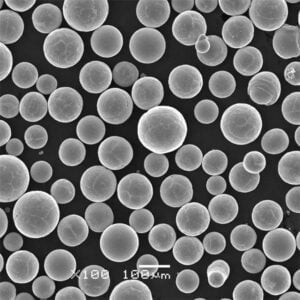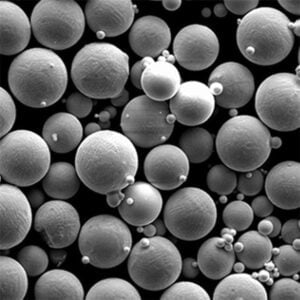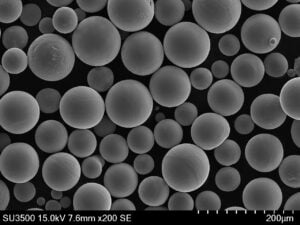
Pure tungsten powder offers the highest density, strength, and thermal properties among metals. This guide provides a detailed overview of unalloyed tungsten powder for industrial applications.
Introduction to Pure Tungsten Powder
Pure tungsten powder contains >99.9% tungsten with minimal impurities. Key properties:
- Extremely high density of 19.3 g/cc
- Highest melting point of all metals – 3422°C
- High temperature strength
- Excellent thermal conductivity
- Low coefficient of thermal expansion
- Good corrosion and oxidation resistance
Benefits over alloyed powders:
- Superior thermal properties
- Improved electrical conductivity
- Higher density and purity
- Better sintered strength
- Avoidance of alloying elements
With its unsurpassed density and temperature resistance, pure tungsten enables high performance applications across industries.
Types of Pure Tungsten Powder
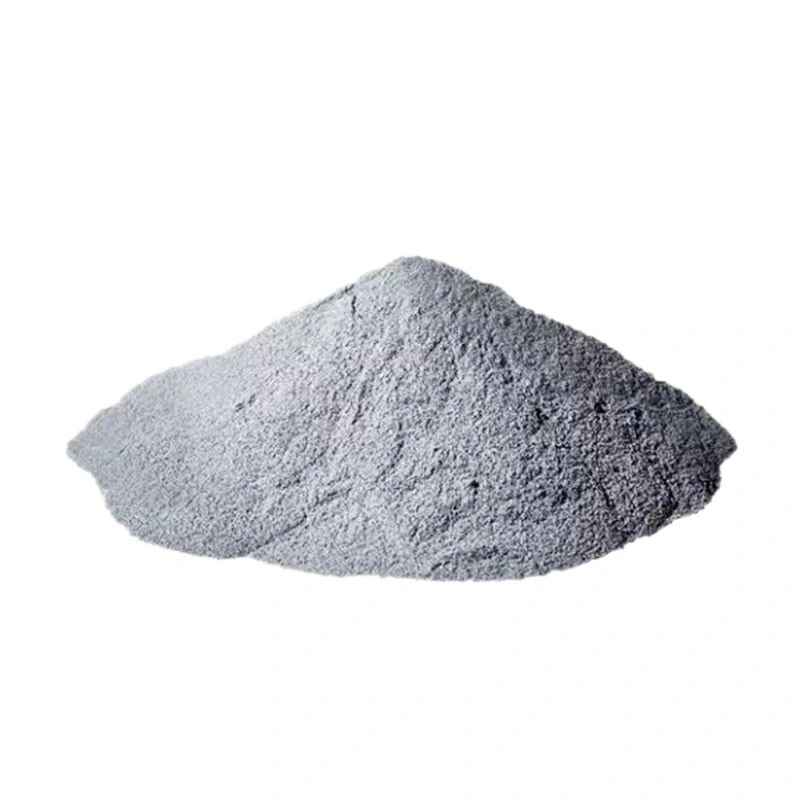
Various grades of pure tungsten powder:
Types of Pure Tungsten Powder
| Type | Purity | Particle Size | Morphology |
|---|---|---|---|
| Pure | 99.9% W | 1-150 μm | Irregular, angular |
| Ultrafine | 99.9% W | <10 μm | Spherical |
| Nanopowder | >99.9% W | <100 nm | Spherical |
| High purity | 99.95-99.99% W | 1-45 μm | Sponge-like |
Purity levels range from 99.9% to 99.999% tungsten content. Particle size, shape, and production method can be varied based on application.
Composition of Pure Tungsten Powder
Typical composition of pure tungsten powder:
- Tungsten (W) – 99.9% to 99.999%
- Oxygen (O) – 500-1000 ppm
- Carbon (C) – 100-300 ppm
- Nitrogen (N) – 20-100 ppm
- Hydrogen (H) – 20-100 ppm
- Potassium (K) – 20-50 ppm
- Sodium (Na) – 10-50 ppm
Higher purity grades minimize oxygen and other interstitials for better ductility and corrosion resistance.
Properties of Pure Tungsten Powder
Properties of Pure Tungsten Powder
| Property | Value |
|---|---|
| Density | 19.3 g/cc |
| Melting point | 3422°C |
| Thermal conductivity | 173 W/mK |
| Electrical resistivity | 5.6 μΩ-cm |
| Tensile strength | 550-620 MPa |
| Elastic modulus | 400 GPa |
| Thermal expansion coefficient | 4.5 x 10⁻⁶/K |
The extreme density, thermal properties, strength, and temperature resistance make pure tungsten suitable for high performance applications.
Characteristics of Pure Tungsten Powder
Characteristics of Pure Tungsten Powder
| Parameter | Details | Significance |
|---|---|---|
| Particle size | 1-150 μm | Smaller sizes improve sintering |
| Particle shape | Varied – angular, spherical | Impacts density and flow |
| Apparent density | 3-4 g/cc | Indicates compaction properties |
| Tap density | 9-11 g/cc | High packing density |
| Flow rate | 20-25 s/50g | Measure of powder flowability |
| Oxygen content | <1000 ppm | Affects ductility and strength |
Controlling size distribution, shape, surface area, density, and oxygen content is crucial for pure tungsten powder functionality.
Specifications of Pure Tungsten Powder
Pure Tungsten Powder Specifications
| Parameter | Values | Standard |
|---|---|---|
| Tungsten content | >99.9% | ASTM B763 |
| Particle size | 1-10 μm | ASTM B213 |
| Apparent density | >3 g/cc | ASTM B212 |
| Tap density | >9 g/cc | MPIF 04 |
| Flow rate | <25 s/50g | ASTM B213 |
| Oxygen content | <1000 ppm | ASTM B939 |
Compliance with standardized specifications ensures batch-to-batch consistency and suitability for industrial applications.
Particle Sizes of Pure Tungsten Powder
Common particle size ranges:
Pure Tungsten Powder Particle Sizes
| Size | Description | Typical Uses |
|---|---|---|
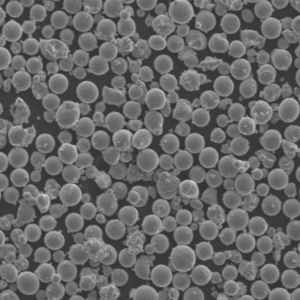
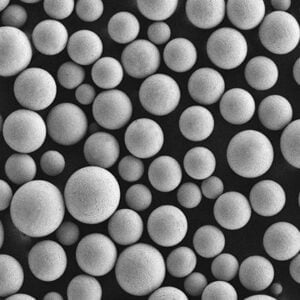
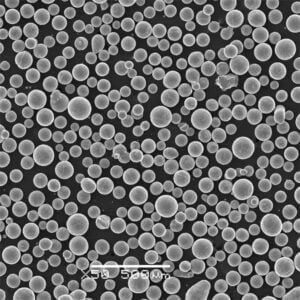
| 1-10 μm | Ultrafine grade | Additive manufacturing |
| 10-25 μm | Fine grade | Powder injection molding |
| 25-45 μm | Medium grade | Cutting tools |
| 45-150 μm | Coarse grade | Tungsten heavy alloys |
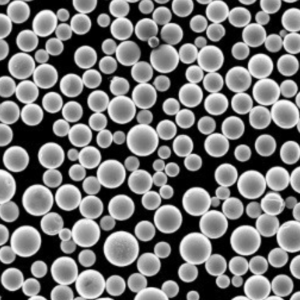
Smaller particles sizes improve sintering and material properties but reduce flowability. Larger particles offer better packing density.
Grades of Pure Tungsten Powder
Grades of Pure Tungsten Powder
| Grade | Purity (%W) | Oxygen (ppm) | Particle Size (μm) |
|---|---|---|---|
| CP | 99.9 | 700-1200 | 1-150 |
| RMP | 99.95 | 400-800 | 1-45 |
| SP | 99.98 | 100-300 | 1-25 |
| EL-Grade | 99.99 | 50-150 | 1-10 |
CP – Crude powder, RMP – Reactor melt powder, SP – Sodium-reduced powder, EL-Grade – High purity
Higher purity reduces impurities and contamination for improved performance.
Global Standards for Pure Tungsten Powder
Key standards for pure tungsten powder:
- ASTM B763 – Standard specification for pure tungsten powder
- ISO 18274 – Chemical analysis of pure tungsten powders
- MPIF Standard 55 – Material standards for tungsten powder
- ASTM B939 – Guide to characterization of tungsten powder
- GB/T 4408 – Chinese standard for tungsten powders
These help ensure quality for different applications worldwide. Customized powders can also be produced as per requirements.
Applications of Pure Tungsten Powder
Applications of Pure Tungsten Powder
| Industry | Application |
|---|---|
| Aerospace | Radiation shielding, counterweights |
| Automotive | Vibration damping in vehicles |
| Electronics | Heat sinks, contacts, electrodes |
| Military | Kinetic energy penetrators, ordnance |
| Manufacturing | Cutting tools, dies, tooling |
| Oil and gas | High density drilling mud additive |
Pure tungsten’s extreme density and temperature resistance make it ideal for high-performance parts and components across sectors.
Suppliers of Pure Tungsten Powder
Leading Suppliers of Pure Tungsten Powder
| Company | Location |
|---|---|
| HC Starck | Germany, USA |
| Buffalo Tungsten | USA |
| Midwest Tungsten | USA |
| Plansee | Austria |
| Zhuzhou Cemented Carbide | China |
These established manufacturers offer various pure tungsten powder types and can customize grades based on purity, particle size, and property requirements.
Cost Analysis of Pure Tungsten Powder
Pure Tungsten Powder Pricing
| Grade | Price per kg |
|---|---|
| CP (99.9% W) | $100-150 |
| RMP (99.95% W) | $150-200 |
| SP (99.98% W) | $200-300 |
| EL-Grade (99.99% W) | $300-500 |
Pricing depends on purity, particle characteristics, supplier, and order volume. Prices are higher for finer particle sizes and higher purity.
Pros and Cons of Pure Tungsten Powder
Advantages of Pure Tungsten Powder
- Superior thermal conductivity and temperature resistance
- Improved strength and ductility over alloyed grades
- Highest density of all metallic powders
- Environmentally stable and inert
- Better finishing and surface roughness
- Can be recycled from scrap and waste
Limitations of Pure Tungsten Powder
- Very expensive compared to other powders
- Challenging to process due to high melting point
- Lower fracture toughness than alloyed tungsten
- Limited global supply and availability
- Requires handling precautions due to dust explosion risks
- Difficult to machine finished parts
For critical applications where performance outweighs cost, unalloyed tungsten is the material of choice. Proper precautions are necessary during handling and processing.
Comparison of Pure Tungsten Powder with Other Metals
Comparison With Alternative Metal Powders
| Parameter | Tungsten | Molybdenum | Tantalum |
|---|---|---|---|
| Density (g/cc) | 19.3 | 10.3 | 16.6 |
| Melting point (°C) | 3422 | 2617 | 2996 |
| Thermal conductivity (W/mK) | 173 | 138 | 57 |
| Electrical resistivity (μΩ-cm) | 5.6 | 5.7 | 13 |
| Price per kg | $100-$500 | $30-$100 | $250-$500 |
Tungsten outperforms other refractory metals on key thermal and mechanical characteristics but with higher cost.
FAQs
Q: How is pure tungsten powder produced?
A: Pure tungsten is mainly produced by reduction of tungsten oxide using hydrogen. Additional steps of crushing, milling, annealing, and blending achieve the desired powder characteristics.
Q: What is pure tungsten powder used for?
A: Key applications include radiation shielding, counterweights, tooling, cutting tools, grinding media, tungsten heavy alloys, electrical contacts, and heating elements.
Q: What precautions are needed when working with tungsten powder?
A: Tungsten powder poses explosion and inhalation risks requiring protective gear, ventilation, and inert gas glove boxes for storage and handling. Appropriate fire safety measures are essential.
Q: What are the different particle sizes available for pure tungsten powder?
A: Particle sizes range from 1-10 microns for ultrafine, 10-25 microns for fine, 25-45 microns for medium, and 45-150 microns for coarse fractions based on application requirements.
Q: Is pure tungsten powder more expensive than tungsten carbide?
A: Yes, pure tungsten powder costs 2-4 times higher than tungsten carbide powders. However, properties like higher density and electrical/thermal conductivity justify the added cost.
Q: What purity levels are commercially available?
A: Common purity levels are 99.9% (CP grade), 99.95% (RMP grade), 99.98% (SP grade), and 99.99% (EL grade) tungsten content. Higher purity further increases cost.
Q: Can pure tungsten powder be 3D printed?
A: Yes, high purity tungsten powders in the 10-45 micron range can be used for laser powder bed fusion and binder jetting additive manufacturing with proper parameter optimization.
Q: What post-processing steps are used for pure tungsten parts?
A: Sintered tungsten components are finished by grinding, lapping, polishing, and other methods to achieve tight dimensional and surface tolerance requirements.